Battery Chemistry and Charger Compatibility
Battery chemistry is one of the first specifications to verify because it determines the cell voltage range, charge method, safety limits, aging behavior, and regulatory handling requirements. Common rechargeable systems include lead-acid, nickel-based batteries such as NiCd and NiMH, and lithium-based batteries such as lithium-ion and lithium iron phosphate.
A charger is not just a power source. It follows a charging profile and termination method intended for a particular chemistry. A lead-acid charger, a nickel-based charger, and a lithium-ion charger may all deliver DC power, but they do not terminate charge in the same way. Using the wrong charger can appear to work temporarily, yet fail to detect full charge correctly, overcharge the battery, undercharge it, or leave protective electronics to handle a fault condition.
Chemistry also affects shipping, storage, recycling, and disposal requirements. Lithium batteries, lead-acid batteries, and nickel-based packs are treated differently by transport and waste rules. The practical rule is simple: identify the chemistry before charging, transporting, recycling, or disposing of a battery, and check the current rules that apply to that chemistry and jurisdiction.
Battery Voltage: Nominal, Open-Circuit, and Loaded Values
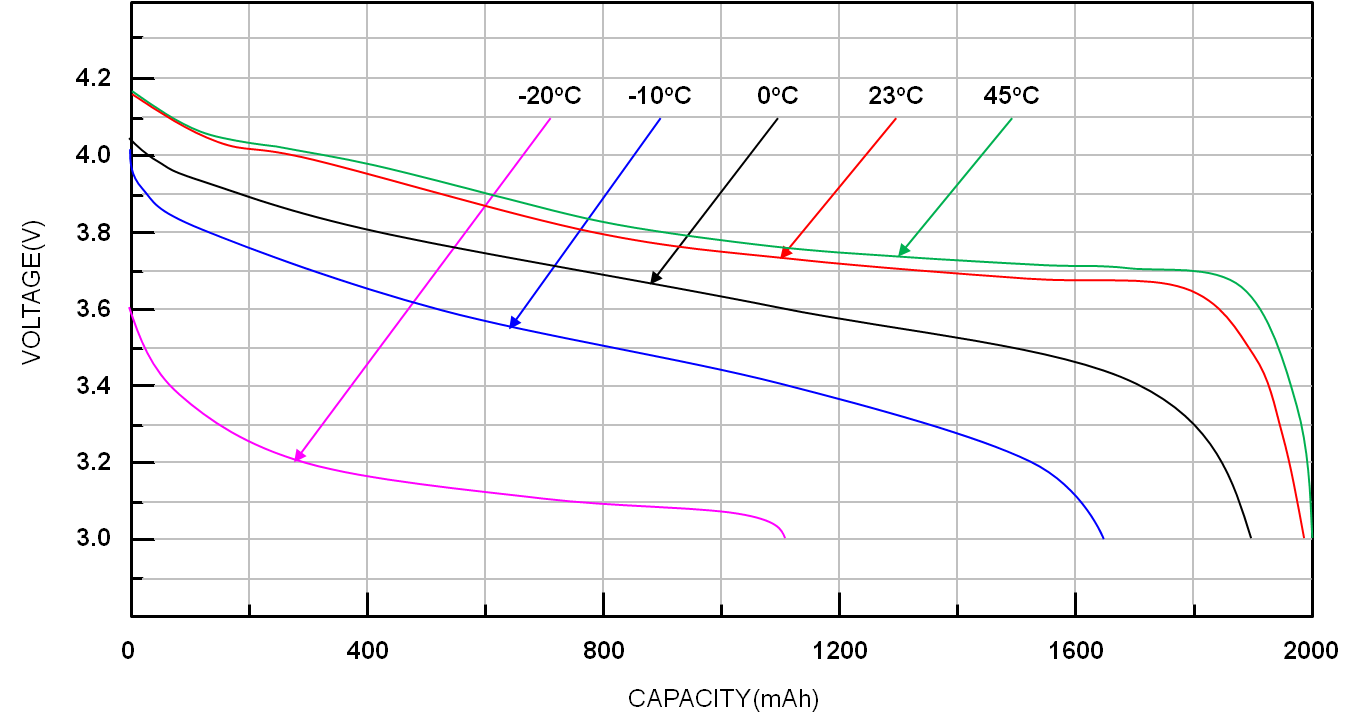
Voltage is the electrical potential of the battery, but the value printed on the label is usually a nominal voltage, not a promise that the battery will remain at that exact voltage during use. Nominal voltage is a compatibility label. A battery described as 12 V, 3.7 V, or 1.2 V may measure above or below that number depending on state of charge, load, temperature, and whether it has recently been charged.
Three voltage terms are especially useful:
- Nominal voltage: the standard voltage category used for matching batteries, devices, and chargers.
- Open-circuit voltage, or OCV: the voltage measured when the battery is at rest and not supplying meaningful current.
- Closed-circuit voltage, or loaded voltage: the voltage measured while current is flowing into a load or charger.
Chemistry sets the approximate cell voltage. Series cell count sets the pack voltage. Typical nominal values include about 2.0 V per lead-acid cell, 1.2 V per NiMH cell, 3.6 to 3.7 V per common lithium-ion cell, and 3.2 V per LiFePO4 cell. A nominal 12 V lead-acid starter battery uses six cells in series. A 4-series LiFePO4 pack is often treated as a 12 V-class battery even though its nominal voltage is closer to 12.8 V.
Source: Original source
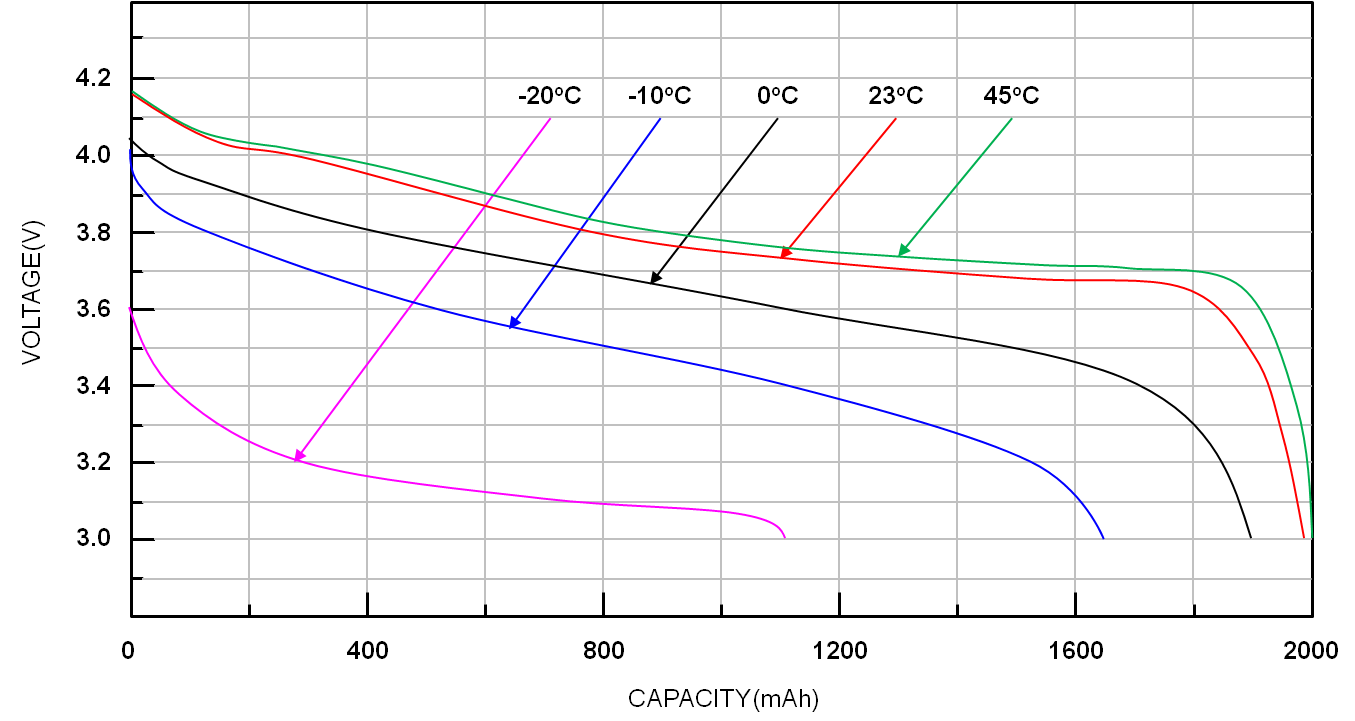
Voltage must be matched carefully when connecting a battery to a load or charger. A charger intended for a different pack voltage may not regulate correctly, and a device designed for one voltage range may malfunction or be damaged if supplied from another.
Battery Capacity in Amp-Hours
Battery capacity is commonly stated in amp-hours, abbreviated Ah. An amp-hour rating describes discharge current over time. In simple terms, a 10 Ah battery can theoretically deliver 10 A for one hour, 5 A for two hours, or 1 A for ten hours under the specified test conditions.
That simple arithmetic is useful for estimates, but real runtime depends on load current, temperature, cutoff voltage, battery age, and chemistry. Capacity also cannot be compared across voltages without converting to energy. A 10 Ah battery at 12 V stores roughly twice the energy of a 10 Ah battery at 6 V, because watt-hours are calculated from voltage and amp-hours.
When voltage and chemistry are compatible, a higher Ah battery generally increases runtime. A lower Ah battery generally reduces runtime. On the same charger, a larger battery normally takes longer to charge because more charge must be returned to the pack.
The reference guidance notes that chargers have some tolerance to Ah mismatch when voltage and chemistry are the same, but the discrepancy should not exceed about 25 percent. This is a practical caution rather than permission to ignore the equipment manual. Charger current, charge timeout, temperature sensing, and battery management electronics can all impose tighter limits.
Starter batteries are labeled differently by market. European starter batteries are commonly marked in Ah. North American starter batteries often use Reserve Capacity, or RC, which is the discharge time in minutes at a 25 A discharge rate. Ah and RC both describe stored energy capability, but they are not the same label and should not be treated as interchangeable without understanding the test basis.
Cold Cranking Amps for Starter Batteries
Cold cranking amps, abbreviated CCA, describe a starter battery’s ability to deliver high current at low temperature. This is a power-delivery rating for engine starting, not a measure of how long the battery can run lights, electronics, or auxiliary equipment.
CCA is commonly specified at -18°C, or 0°F. Low temperature matters because chemical reaction rates slow, electrolyte conductivity changes, and engine oil becomes harder to turn. A battery that performs adequately at room temperature may struggle to supply starter current in cold weather.
American and European CCA-related standards can use different test durations and end-voltage criteria, so the number on the label should be interpreted according to the applicable standard. For replacement selection, the practical requirement is to meet the vehicle or equipment manufacturer’s specified battery type, voltage, physical format, and minimum cranking rating.
Specific Energy and Energy Density
Specific energy and energy density describe how much energy a battery stores relative to its weight or volume.
| Metric | Common unit | Meaning |
|---|---|---|
| Specific energy, or gravimetric energy density | Wh/kg | Energy stored per unit mass |
| Volumetric energy density | Wh/L | Energy stored per unit volume |
These metrics matter when runtime, mass, and package size are constrained. Portable electronics, electric mobility, drones, medical devices, and vehicle traction batteries often prioritize high specific energy because extra mass directly affects usability, range, or portability.
Specific energy is closely related to runtime, but it is not the same as power capability. A battery may store a large amount of energy yet be unable to deliver it quickly. Conversely, a device optimized for very high current may sacrifice total stored energy.
Specific Power and High-Load Capability
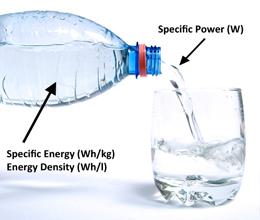
Specific power, also called gravimetric power density, describes power delivery per unit mass. It is a loading-capability metric. A battery with high specific power can deliver high current relative to its weight without excessive voltage sag or heating, assuming it is used within its rated limits.
Specific power is associated with low effective internal resistance and strong current delivery. Power-tool batteries are a practical example. They are designed to supply high current bursts to motors, often at the cost of lower specific energy than a battery optimized primarily for long runtime.
Source: Original source

The distinction between energy and power is essential:
- Specific energy answers how much energy the battery can store for its weight.
- Specific power answers how quickly the battery can deliver energy for its weight.
A high-energy design is useful for long operating time. A high-power design is useful for acceleration, cranking, pulsed loads, or heavy tools. The same battery rarely maximizes both at once.
C-Rate for Charge and Discharge Current
C-rate expresses charge or discharge current relative to rated capacity. It lets engineers compare current stress across batteries of different sizes.
For a battery rated at 10 Ah:
| C-rate | Current | Approximate ideal duration |
|---|---|---|
| 1C | 10 A | 1 hour |
| 0.5C | 5 A | 2 hours |
| 0.1C | 1 A | 10 hours |
On charge, a 1C rate would nominally return the rated capacity in about one hour, while 0.5C takes about two hours. A 0.1C charge may take longer than ten hours because charge acceptance and termination behavior are not perfectly efficient; the supplied reference notes about 10 to 14 hours for this slow charge case.
C-rate is a comparison tool, not the final authority. Actual allowable charge and discharge currents must come from the product datasheet, charger specification, battery management system limits, or equipment manual. Two packs with the same Ah rating can have different cells, protection electronics, wiring, cooling, and terminals.
High C-rates can reduce delivered capacity, increase voltage sag, generate more heat, and accelerate aging depending on chemistry and design. Low C-rates are gentler but may be impractical where fast charging or high power is required.
Electrical Load and Voltage Sag
A load is the current or power demand placed on a battery. Loads may be steady, pulsed, resistive, motor-driven, electronic, or inverter-fed. The battery response depends on current demand, state of charge, temperature, age, and internal resistance.
Power in watts is calculated as:
Watts = volts × amps
A nominal 12 V load drawing 10 A uses approximately 120 W. Energy use over time is expressed in watt-hours. A 120 W load running for two hours consumes about 240 Wh, ignoring conversion losses and voltage variation.
Under load, battery voltage drops. This is commonly called voltage sag. Higher current causes greater sag, and higher internal resistance makes the effect worse. Aging, cold temperature, low state of charge, undersized wiring, and poor connections can all increase voltage drop seen by the equipment.
Voltage sag affects runtime and performance. A motor may slow, an inverter may trip on low voltage, or electronics may shut down even though the battery still contains some stored energy. For this reason, runtime estimates based only on nominal voltage and Ah rating can be optimistic for heavy loads.
Watts, Volt-Amps, and Power Factor
Watts and volt-amps are both power-related units, but they are not always the same in AC systems.
- Watts, W: real power doing useful work or being converted to heat, motion, light, or stored energy.
- Volt-amps, VA: apparent power, calculated from RMS voltage and RMS current.
- Power factor, PF: the ratio of real power to apparent power.
For a purely resistive AC load, watts and VA are effectively equal because the power factor is close to 1. For reactive or nonlinear loads, watts can be lower than VA. Motors, transformers, switch-mode power supplies, UPS systems, and inverters are common applications where VA ratings matter.
This distinction is important when sizing backup power. A UPS or inverter may have both watt and VA ratings. The connected equipment must stay within both limits. A load that appears acceptable by watts alone may exceed the VA capability if its power factor is low or if it has high inrush current.
State of Health
State of health, or SoH, estimates the condition of a battery compared with a new or reference battery. It is a long-term condition indicator, not a direct fuel gauge.
Common SoH indicators include:
- Remaining usable capacity compared with rated capacity
- Internal resistance or impedance increase
- Self-discharge rate
- Ability to deliver current without excessive voltage sag
- Error history or protection events in managed packs
A new battery is often treated as 100 percent SoH for practical comparison. As it ages, capacity falls and internal resistance usually rises. A battery may still show a high state of charge after charging, yet have poor SoH and deliver short runtime or weak high-current performance.
SoH can be described as absolute or relative. Absolute SoH attempts to compare the battery against a defined new-condition reference. Relative SoH may compare the battery against the needs of a specific application. A battery that is unsuitable for engine starting may still be usable in a light-duty, low-current application if safety and system requirements are met.
Assessment methods include controlled capacity tests, resistance or impedance checks, self-discharge observation, and battery management system estimates. In consumer products, SoH is often hidden behind service messages, battery condition menus, or replacement warnings rather than exposed as a raw engineering value.
State of Charge
State of charge, or SoC, estimates how much charge remains in the battery at a given time. It is commonly expressed as a percentage, where 100 percent indicates full charge according to the system definition and 0 percent indicates the defined empty point.
Common SoC estimation methods include:
- Voltage-based estimation, using open-circuit or compensated voltage
- Coulomb counting, integrating current into and out of the battery
- Battery management system algorithms, combining voltage, current, temperature, aging data, and learned capacity
SoC is useful but imperfect. Voltage changes with load and temperature. Batteries recover voltage after load removal. Aging changes usable capacity. Coulomb counting can drift if calibration is poor or if full-charge and empty reference points are not periodically relearned. Lithium chemistries with flat voltage curves can be especially difficult to estimate from voltage alone over the middle of the discharge range.
Absolute and relative SoC are also different. Absolute SoC relates to the battery’s full theoretical or reference capacity. Relative SoC usually relates to the usable window allowed by the product or battery management system. A device may report 0 percent before the cells are electrochemically empty because the system reserves margin to protect the battery.
Modern BMS and fuel-gauge ICs improve SoC accuracy by measuring current, voltage, temperature, and learned behavior, but they do not make SoC perfect under every load, temperature, and aging condition.
State of Function
State of function, or SoF, asks a practical question: can the battery perform the required task right now? It combines state of charge, state of health, temperature, load demand, and the application’s minimum voltage or power requirement.
A battery can have adequate SoC but poor SoF for a demanding task. For example, an aged or cold starter battery may contain charge yet fail to crank an engine because voltage collapses under load. Conversely, the same battery might still power a small low-current load.
SoF is often easiest to visualize as a go/no-go or tri-state indication:
- Ready for the required task
- Marginal or limited function
- Not suitable for the required task
Modern products may not label this explicitly as SoF. Instead, they show simplified messages such as service battery, reduced power, low temperature charging disabled, replace battery, or insufficient charge for operation. The engineering concept is the same: usability depends not only on how much charge remains, but on whether the battery can deliver the required performance under present conditions.
References
- BU-105: Battery Definitions and what they mean
- Battery Definitions | Latest News
- WHAT IS THE BEST BATTERY, HOW TO MAKE …
- AUG 29 2011 - PHMSA
- DIFFERENT TYPES OF BATTERIES,EV …
- Battery Types and Definitions | PDF
- Understanding Lithium Battery Terminology | LiFePO4 Battery Guide
- What are six key considerations when choosing a Li-ion battery chemistry? - Battery Power Tips
- Battery Nominal Voltage: Definition, Standards, and System Application – TYCORUN
- Understanding Voltage Requirements of a Custom Battery Pack